
Our work is about understanding and improving supply chains to meet human needs.
Supply chains are the lifelines of humanitarian action. At the MIT Humanitarian Supply Chain Lab (HSCL), we take a systems-based approach to improve the flow of essential goods into communities facing acute crisis or chronic shortage. From global to local, we support public agencies, nonprofits and companies that strive together for social impact.
We build supply chain resilience and scale humanitarian action through field research, scientific study, strategic synthesis, decision support tools and training so that humans are at their best when their skills are needed most.

Research Areas
Supply Chain Resilience
Modeling supply chains as complex adaptive systems, we design for resilience, identify interventions and facilitate private and public sector cooperation.
Housing Innovation
We engage public and private stakeholders in the post-disaster context to remove constraints and modernize the construction supply chain to meet housing needs.
Health Emergencies
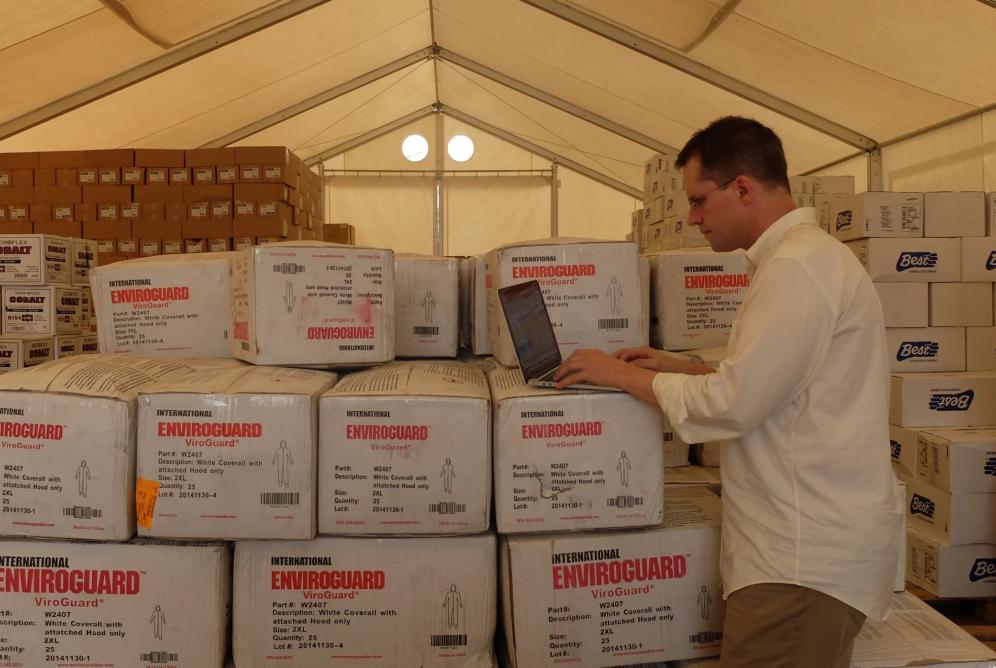
We directly support health systems to surge medical supply chains during emergencies and to prepare for future outbreaks and disruptions.
Humanitarian Action
We work alongside public, private, humanitarian, development and community organizations on several continents in direct action and grounded research to improve humanitarian outcomes.

Research Projects
Educational Coursework
The Humanitarian Supply Chain Lab offers a range of educational opportunities for students and professionals to build practical skills in humanitarian logistics and supply chain management. Offerings include in-person and online courses, independent study and project-based learning, and collaborative programs with leading institutions.
- MIT SCM.S90: Humanitarian Supply Chain Seminar — A new case base course where students explore how supply chains can effectively meet human needs during humanitarian crises. Class sessions include guest speakers, case studies, and contextual exercises developed by the instructor from global research, fieldwork, and crisis deployment.
- MIT SCM.283: Humanitarian Logistics — An in-person course exploring logistics strategies, technologies, and management approaches for humanitarian crises through cases, guest speakers, and real-world team projects.
- MITx SCM.283x: Humanitarian Logistics — A flexible online course offering professional and academic certification through MIT Open Learning and edX, accessible to learners worldwide.
- MITx CTL.SC2x: Supply Chain Design — An online course covering the design of physical, financial, informational, and organizational flows across global supply chains.
- MIT Independent Study Credits — Students can earn academic credit through hands-on Humanitarian Supply Chain Lab projects addressing real-world challenges.
- Harvard Humanitarian Initiative — The Lab provides logistics curriculum and supports an immersive crisis-management simulation as part of the Humanitarian Response Intensive Course.