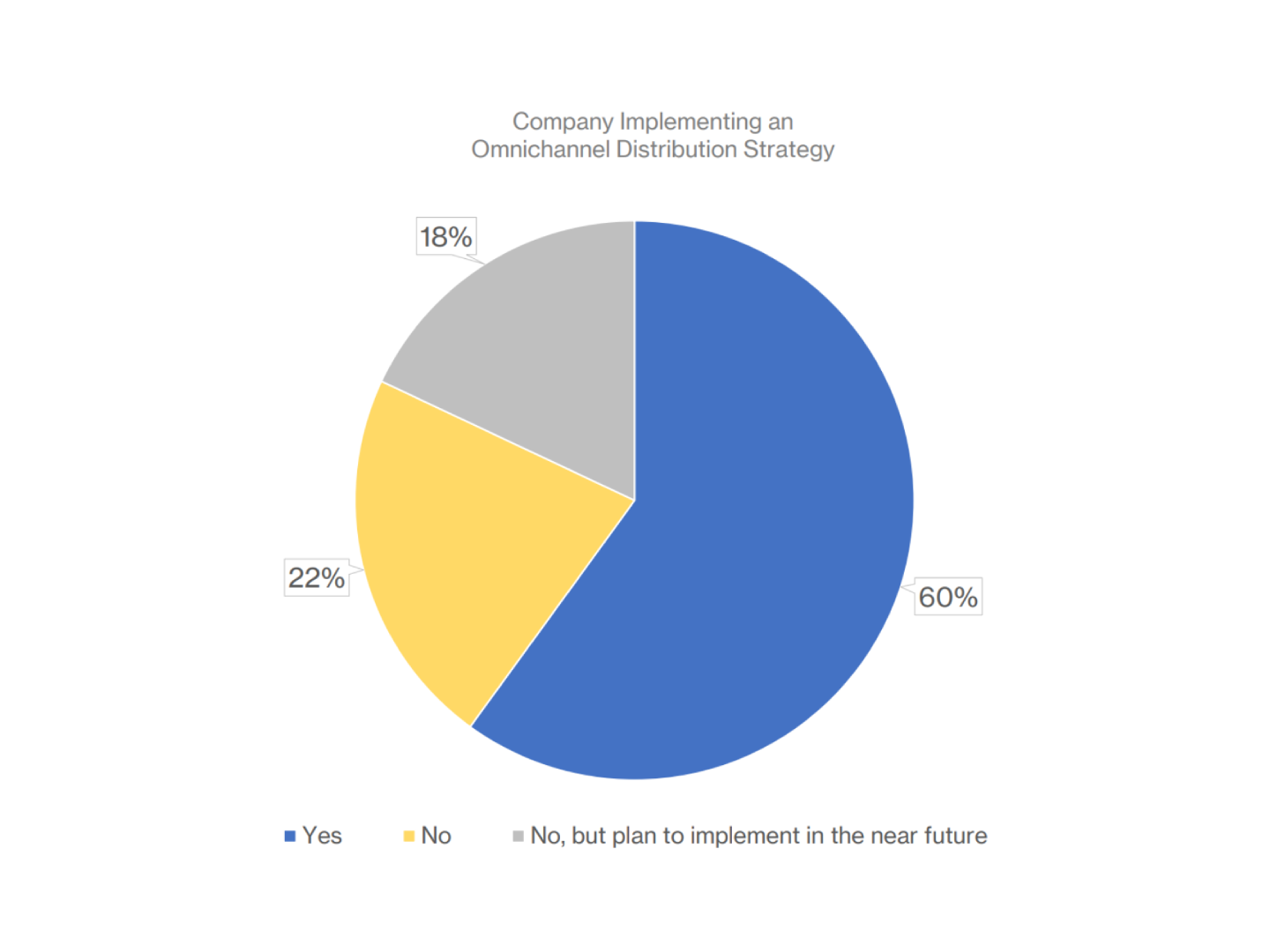
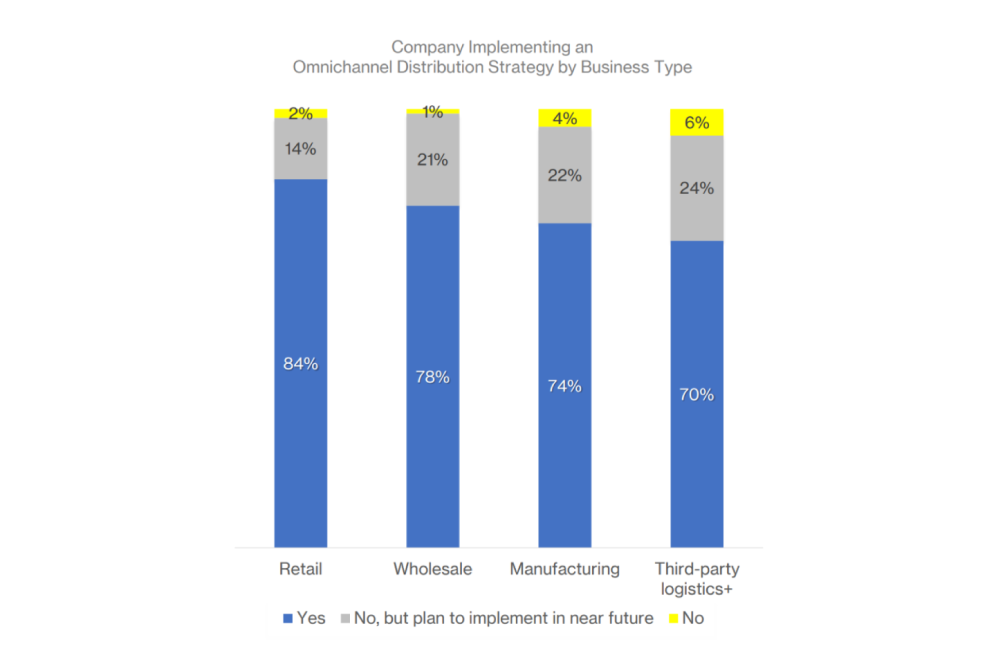
When broken down by type of business, current and future adoption rates remain high across all segments, though with remarkable differences.
Retail leads with 84% of respondents already implementing an omnichannel strategy, reflecting the sector’s exposure to consumer expectations and competitive pressure to deliver seamless shopping experiences.
Wholesale (78%) and manufacturing (74%) follow closely behind, suggesting that the need for omnichannel is reaching beyond the retail end and into upstream supply chain operations.
Third-party logistics providers show the lowest current adoption at 70%, but also the highest response on planned future implementation (24%), showing that this segment is actively preparing to expand its omnichannel capabilities.
Notably, 6% or less of survey respondents across all business types lack a plan for omnichannel implementation, signaling that the approach is no longer a differentiator but a baseline customer expectation.
Technology driving efficiency in an integrated commerce landscape
As companies shift from expectation to action, three critical questions emerge:
- Where are the primary friction points in strategy and implementation?
- Which channels should be prioritized for maximum impact?
- How can operational foundations be built to ensure peak performance?
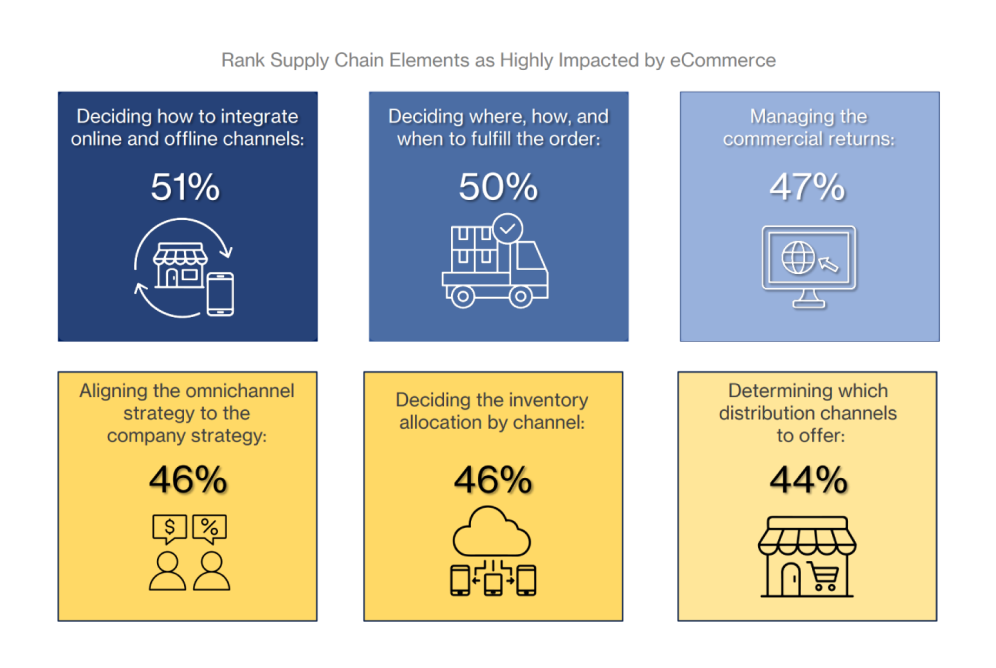
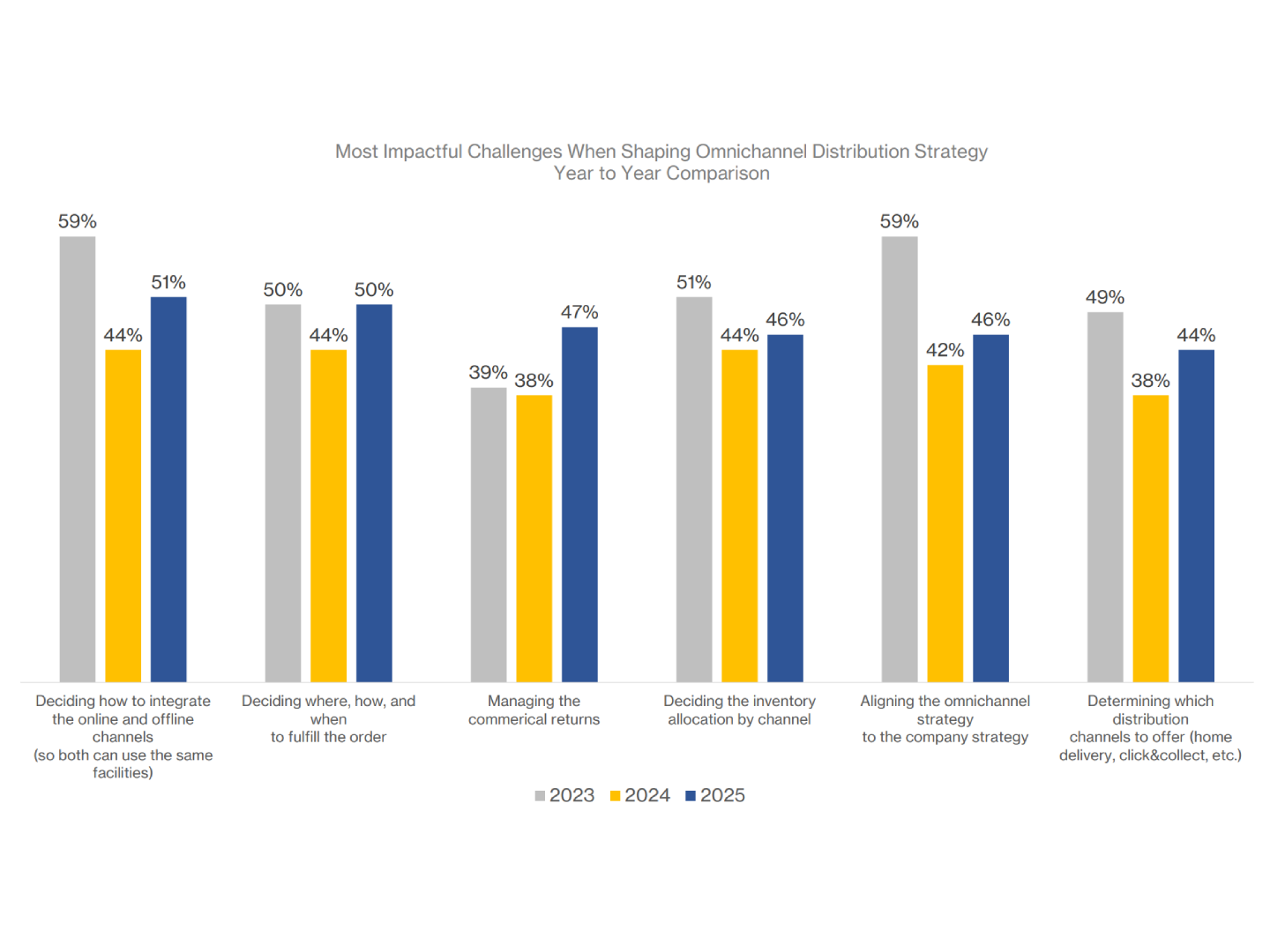
When asked about the key challenges shaping their omnichannel distribution strategies, respondents show that the problem lies more with execution than strategy.
The top challenge, integrating online and offline channels (51%), is followed closely by fulfillment decisions (50%), both up from 44% last year. This suggests that the difficulties lie not in deciding whether to go omnichannel or not, but in making it work operationally.
Returns management (47%) continues to increase (from 38% last year), highlighting the growing operational impact of reverse logistics in the omnichannel landscape. Inventory allocation and strategy alignment also increased, while determining which distribution channels to offer moved up to 44%.
As omnichannel models scale, the operational pressure has become systemic. Integration, fulfillment, and returns are all rising simultaneously, indicating that end-to-end supply chain orchestration challenges are expanding
The path to maturity: stabilizing omnichannel challenges across the enterprise
The annual omnichannel survey also allowed for a longer-term analysis. A three-year observation reveals a consistent pattern of decrease and rebound.
The sharpest declines were in channel integration and strategy alignment between 2023 and 2024, indicating that there was meaningful progress and increased maturity in the implementation stages.
However, their partial recovery in 2025 suggests the need to revisit existing decisions to sustain growth and expected performance.
Returns management stands apart as the only challenge that remained essentially flat before climbing sharply over the three years, reinforcing its status as a growing challenge in omnichannel operations.
By 2025, all challenges fall within a narrow range, showing that as omnichannel matures, observed challenges are more evenly distributed rather than siloed.
Navigating operational friction and the push for profitability
Beyond the challenges of omnichannel implementation, companies are also feeling the weight of concrete operational pain points.
As channel integrations become stronger and at a larger scale, the impact becomes increasingly tangible - touching areas such as inventory positioning and cost structures, while the accelerating pace of technological change builds on the pressure.
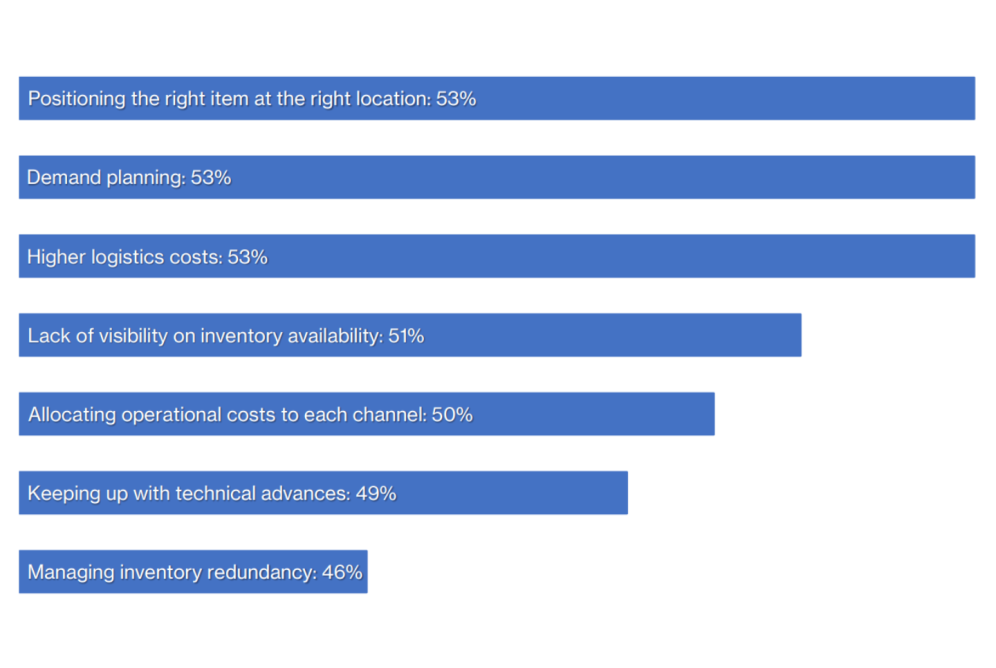
This year’s results reveal pain points concentrating around core operational dimensions.
Inventory positioning, demand planning, and higher logistics costs all cluster around 53%, indicating that operational precision, forecasting accuracy, and cost pressure are equally constraining omnichannel performance.
Visibility (51%) and cost allocation (50%) follow closely, suggesting that both data transparency and financial discipline have become central to managing complexity.
The most meaningful shift, compared to last year, is in demand planning, which despite remaining a top concern, has declined from 63% to 53%, aligning with the wider set of operational pressures.
Meanwhile, allocating operational costs to each channel increased significantly (31% to 50%), reflecting a growing emphasis on profitability and channel-level accountability as omnichannel models mature.
The evolution suggests that omnichannel operational pain points are moving from a forecasting-dominated scenario toward a broader focus on inventory allocation, cost control, and technology-enabled execution.
Managing the impact of multi-channel growth on inventory and allocation
Once there’s a common understanding of the sources of pressure in this landscape, the next step is to analyze how companies structure their distribution channels to respond to customers' increasing expectations and related complexities.
Operating at a larger scale and across additional channels necessarily impacts inventory needs and allocation, costing and pricing decisions, and even related data management.
The way companies distribute their fulfillment operations shows the way they choose to respond to these pressures in practice.
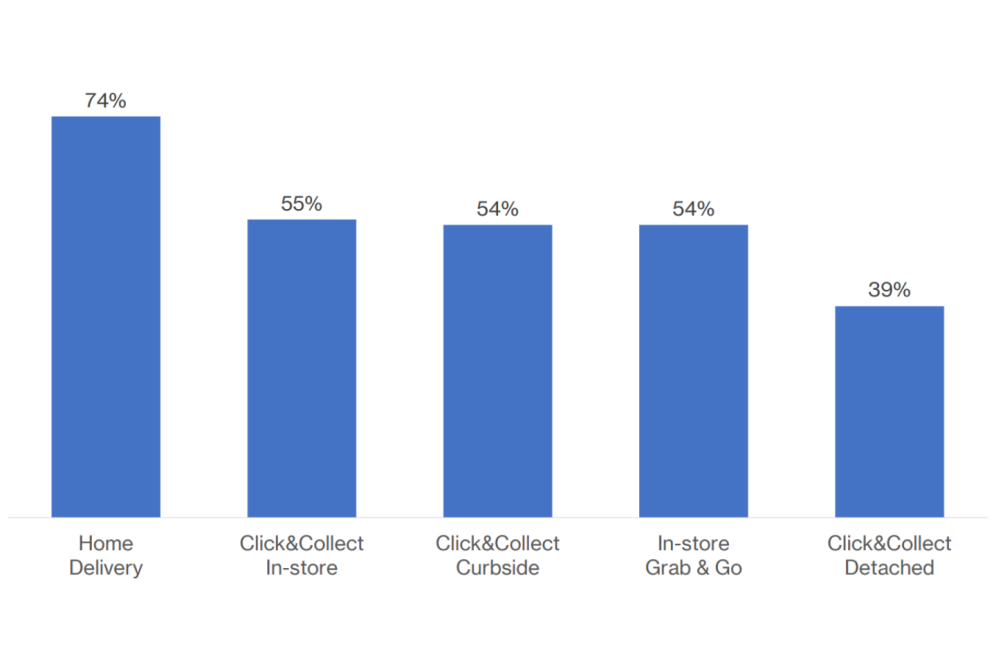
Based on this year's survey, home delivery remains the dominant omnichannel distribution channel, cited by 74% of respondents. However, store-based options continue to play a central role.
Click&Collect in-store (55%), traditional in-store purchasing (54%), and curbside pickup (54%) show nearly identical adoption levels, reinforcing the store’s ongoing importance as both a shopping and fulfillment node.
Locker-based pickup (39%) is growing but remains secondary, showing a more selective adoption pattern.
These results reinforce the omnichannel maturity, showing the simultaneous orchestration of different channels, instead of channel dominance. While digital penetration continues to grow, physical retail remains deeply integrated into omnichannel strategies