Conference

Crossroads 2026

Crossroads 2026 image

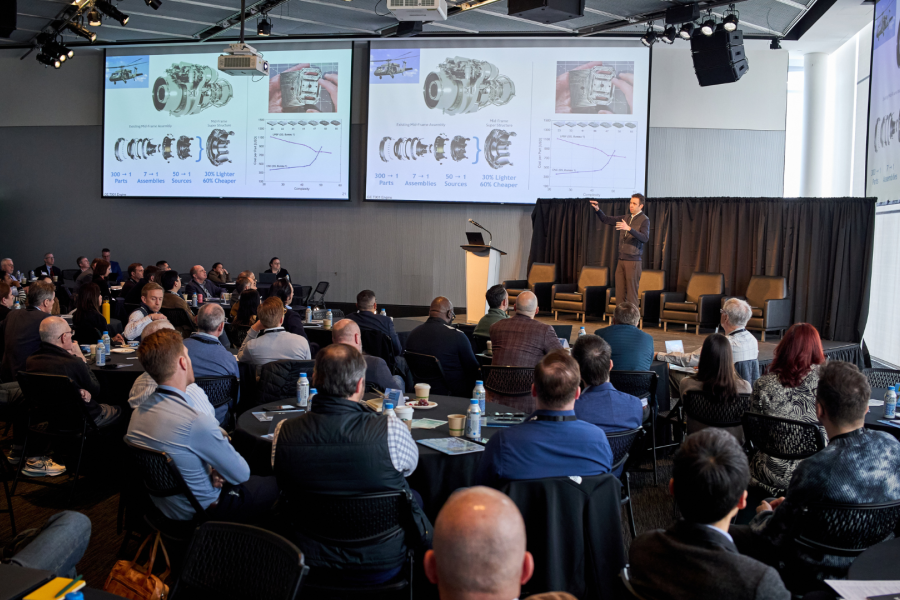
On Tuesday, April 14, 2026, industry leaders gathered at the MIT campus for a day dedicated to examining the future of global supply chains.

The event, Crossroads 2026, arrived at a moment when supply chain executives faced a critical inflection point. As quantum computing began to revolutionize logistics optimization—while simultaneously challenging the security of legacy systems—other systemic pressures like electrical grid vulnerabilities, geopolitical trade instability, and workforce demographic shifts were actively reshaping operational realities.

Use the below boxes to review the presentation slides, event recap and photos.

Crossroads 2026: Program Highlights

Powering the Energy Transition: Building a Resilient, Intelligent Grid for the Future - Brent Brunell, GE Vernova

The US electrical grid faces critical challenges and transformational opportunities over the next decade.  

In this talk we discuss how the grid must evolve to safely absorb vast amounts of renewable energy while maintaining reliability and security in an increasingly complex landscape. The talk will also highlight GE Vernova's innovative solutions and initiatives that are enabling utilities to build future-ready grids capable of meeting 21st-century energy demands.

Realizing the Promise of Quantum Computation - Professor William Oliver, MIT

Quantum computers are fundamentally different than conventional computers. They promise to address certain problems that are practically prohibitive and even impossible to solve using today’s supercomputers. The challenge is building one that is large enough to be useful. In this talk, we will provide an overview of contemporary quantum computing at an intuitive level, including the technology, the promise, the hype, and the challenges ahead associated with realizing useful quantum computers at scale.

Understanding Strategic Trade in Times of Conflict - Professor Mariya Grinberg, MIT

Drawing on her book Trade in War: Economic Cooperation Across Enemy Lines, Professor Grinberg examines the surprising reality that warring states often continue trading with adversaries even during active hostilities, challenging conventional assumptions about economic conflict. She explores how leaders navigate the competing imperatives of weakening enemy economies while maintaining domestic resilience and revenue generation, using historical case studies from the Crimean War through World War II to contemporary geopolitical tensions.

This presentation is particularly relevant for supply chain executives seeking to understand how to balance strategic security concerns with operational realities in an interconnected global economy.

Navigating AI's Impact on the Workforce - Professor Yossi Sheffi, MIT

This talk examines Sheffi and Bouquet's groundbreaking research analyzing over 900 occupations and 2,000 tasks to quantify how AI will affect transportation and other supply chain jobs.   Rather than predicting wholesale job elimination, the presentation reveals which roles face the greatest exposure and provides practical strategies for workforce development and task reallocation. Supply chain leaders will gain actionable insights on preparing their teams for an AI-augmented workplace where human expertise remains irreplaceable.

Demographic Change: The Structural Shock Hiding in Plain Sight - Dr. Joseph Coughlin, MIT

Supply chains have been stress-tested for pandemics, geopolitical conflict, and climate volatility. Yet the most consequential disruption ahead isn’t sudden; it’s structural. Aging populations, declining birthrates, shrinking households, and tightening labor markets are already redefining where capacity exists, how demand behaves, and what “resilience” truly means. These forces will not arrive as headlines. They are arriving quietly and reshaping the economics of supply chains, automation decisions, workforce strategies, and last-mile design. This talk reframes demographic change not as context, but as a system constraint.

The Next Generation in Logistics: Bridging Generational Gaps and Redefining Supply Chain Careers - Dr. Chris Caplice, MIT

As supply chain networks face unprecedented pressure from market volatility, demographic changes, and technological disruption, workforce strategy has become central to operational success. This panel brings together leading practitioners to discuss the critical challenges of talent acquisition, retention, and development while exploring how companies are leveraging training, technology, and organizational redesign to build resilient teams. Join industry leaders for candid insights on navigating workforce pressures and practical strategies for securing competitive advantage through people.

About Crossroads

Since 2005, Crossroads has provided a unique learning experience by connecting industry executives with world-renowned MIT researchers and educators. Hosted by the MIT Center for Transportation & Logistics, this event offers an unparalleled opportunity to gain cutting-edge insights and network with thought leaders at the intersection of technology and supply chain management.

Are you a member of the Supply Chain Exchange?

This event is complimentary for MIT CTL Supply Chain Exchange partners. Please contact ctl_sce@mit.edu for a partner registration code. Participants must register using their work domain email for verification.