From emerging tools to operational foundation
Artificial intelligence and automation are rapidly evolving from siloed applications into system-level operating models, and omnichannel supply chains are no exception.
While many organizations reported using AI tools in our last year's survey, what has fundamentally changed is the degree of integration, scale, and coordination across multiple layers of the supply chain.
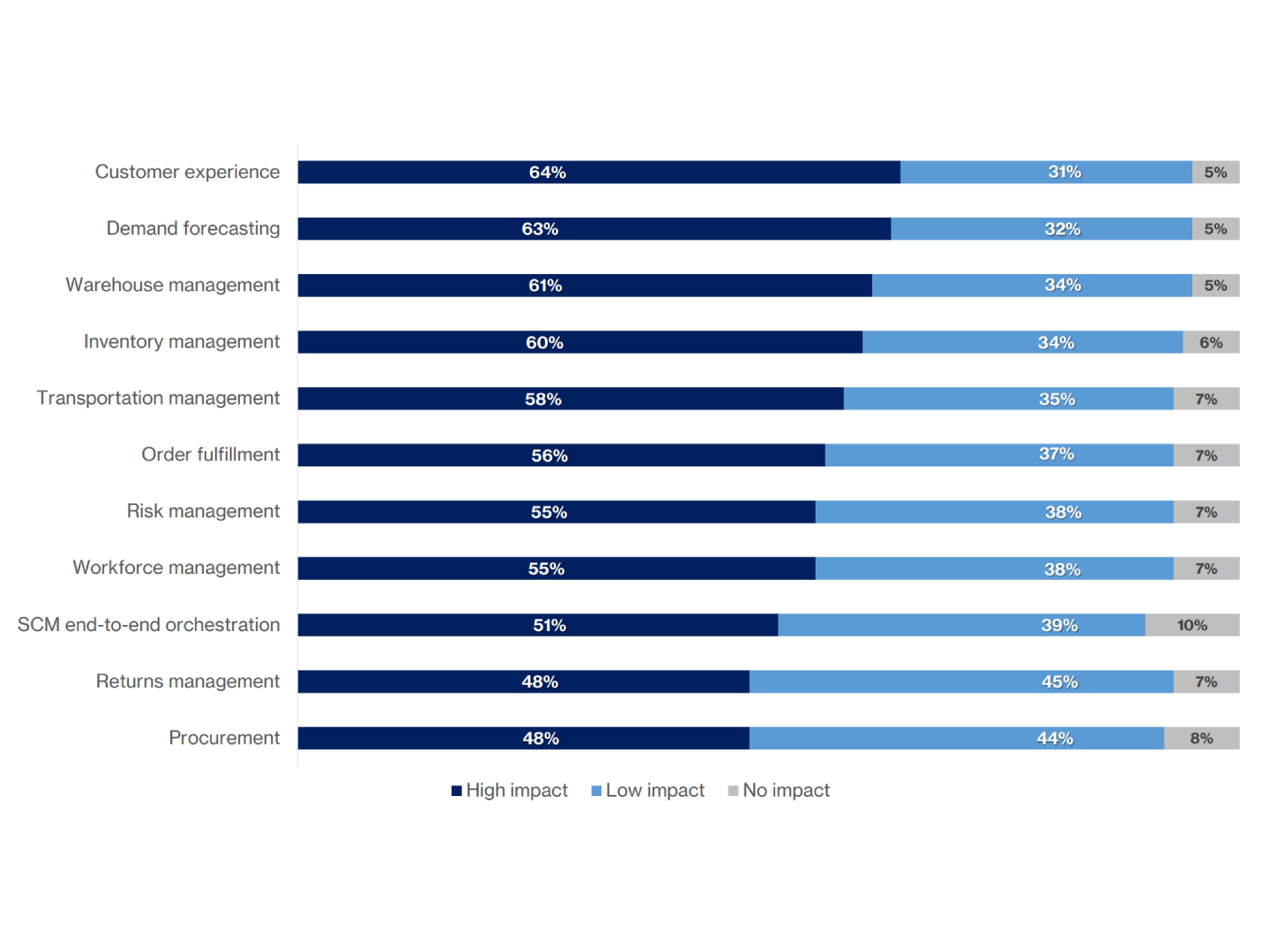
AI is now embedded across key areas, including customer experience, demand forecasting, warehouse, inventory, and transportation management, among others. It is no longer viewed as a tool to fix individual pain points, but as a broader enabler of core omnichannel operations.
The result is a technologically interconnected system capable of handling higher SKU complexity, faster replenishment, and real-time promises.
Adoption trends: high-volume interaction vs. deep operational logic
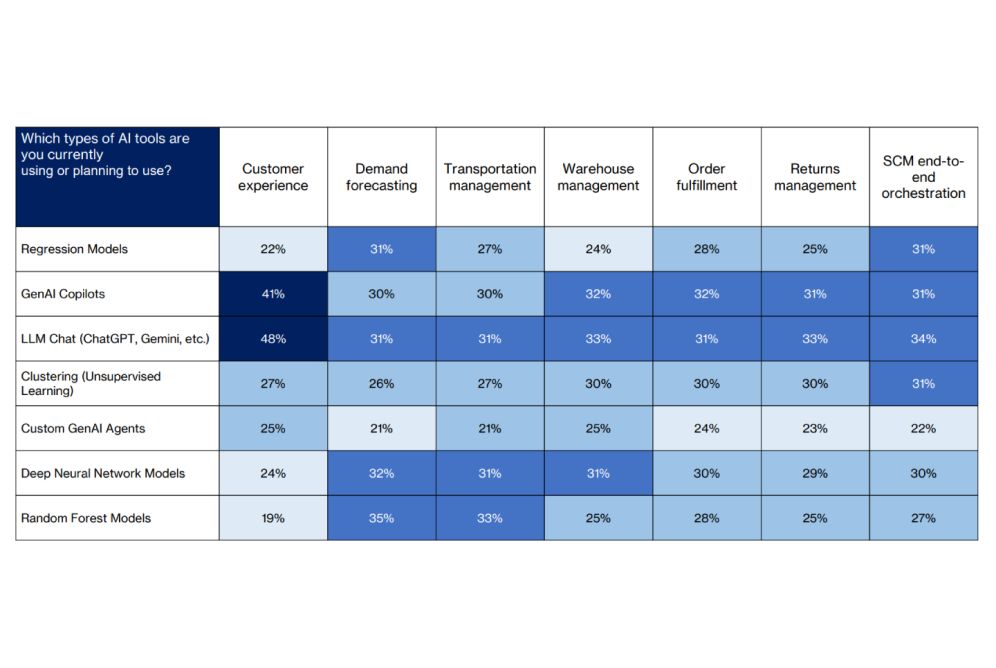
AI adoption varies by function. In customer experience, LLM-based chat tools lead adoption at 48%, exposing the natural fit of conversational AI tools in consumer-facing applications.
GenAI Copilots follow at 41%, suggesting that generative AI is expanding beyond direct consumer interaction into broader workflow support within the same function. Random Forest (35%) and Deep Neural Networks (32%) lead demand forecasting and transportation management.
Operational areas, such as warehouse management and order fulfillment, stand out for their balanced mix of AI methods, with no single approach dominating in the top three tools.
Similarly, SCM end-to-end orchestration shows the most even spread across all tool types, a reflection of its role in integrating complex functions and AI capabilities.
Custom GenAI Agents show the lowest adoption across all functions, ranging from 21% to 25%.
However, the fact that it’s being applied in all functions already suggests this tailored kind of AI solution is consistently being explored.
Personalization 2.0: broader reach, deeper insights, and unified strategy
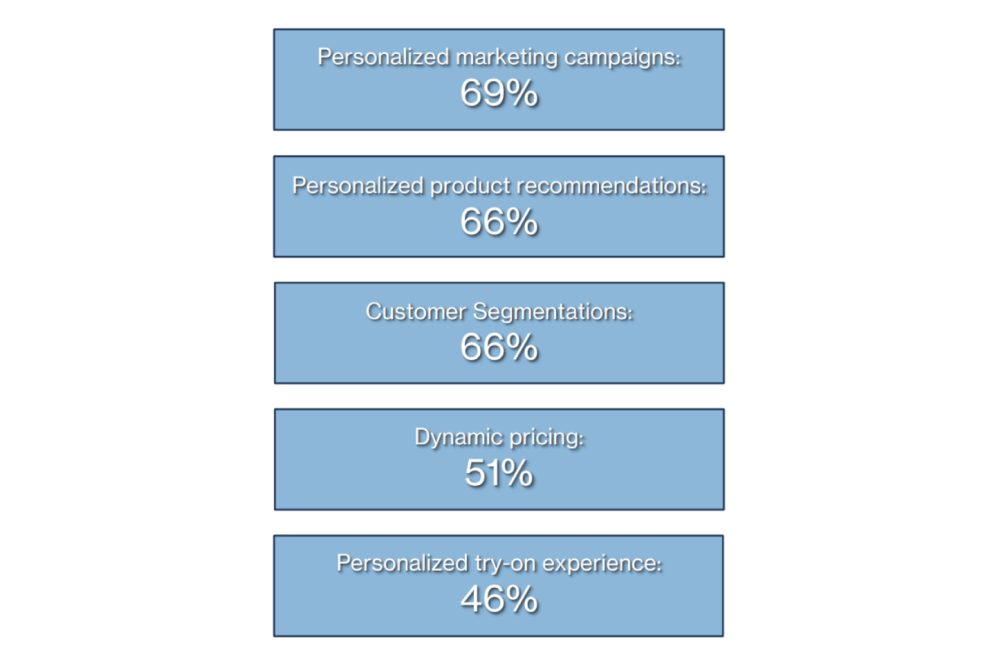
AI-powered personalization is expanding, led by marketing campaigns (69%), product recommendations (66%), and customer segmentation (66%).
Segmentation nearly doubled from last year (37%), indicating stronger data foundations and more targeted omnichannel engagements. Personalization is becoming broader, deeper, and more integrated across channels.
Overall, the results point to a shift from fragmented personalization tactics toward more data-driven, integrated customer strategies powered by AI.
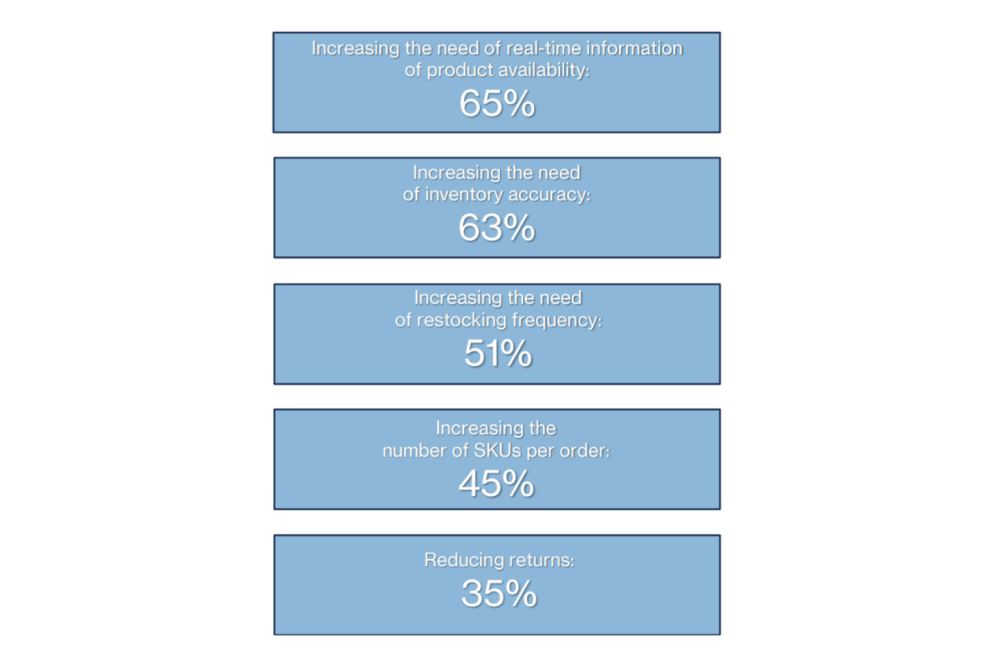
Supply chain impact of customers' personalized experience powered by AI:
AI-driven personalization is reshaping core supply chain requirements. The strongest impacts are the increased need for real-time product availability (65%) and higher inventory accuracy (63%). Personalization is placing direct pressure on inventory visibility and precision.
Operational complexity is also rising. Over half of respondents (51%) reported increased restocking frequency, while 45% observe a higher number of SKUs per order. As customer journeys become more tailored, supply chains must handle greater fragmentation in demand patterns and replenishment cycles.
At the same time, 35% indicate that AI-enabled personalization helps reduce returns, suggesting that more accurate recommendations and tools such as virtual try-on experiences are beginning to offset some downstream costs.
Key technologies in fulfillment:
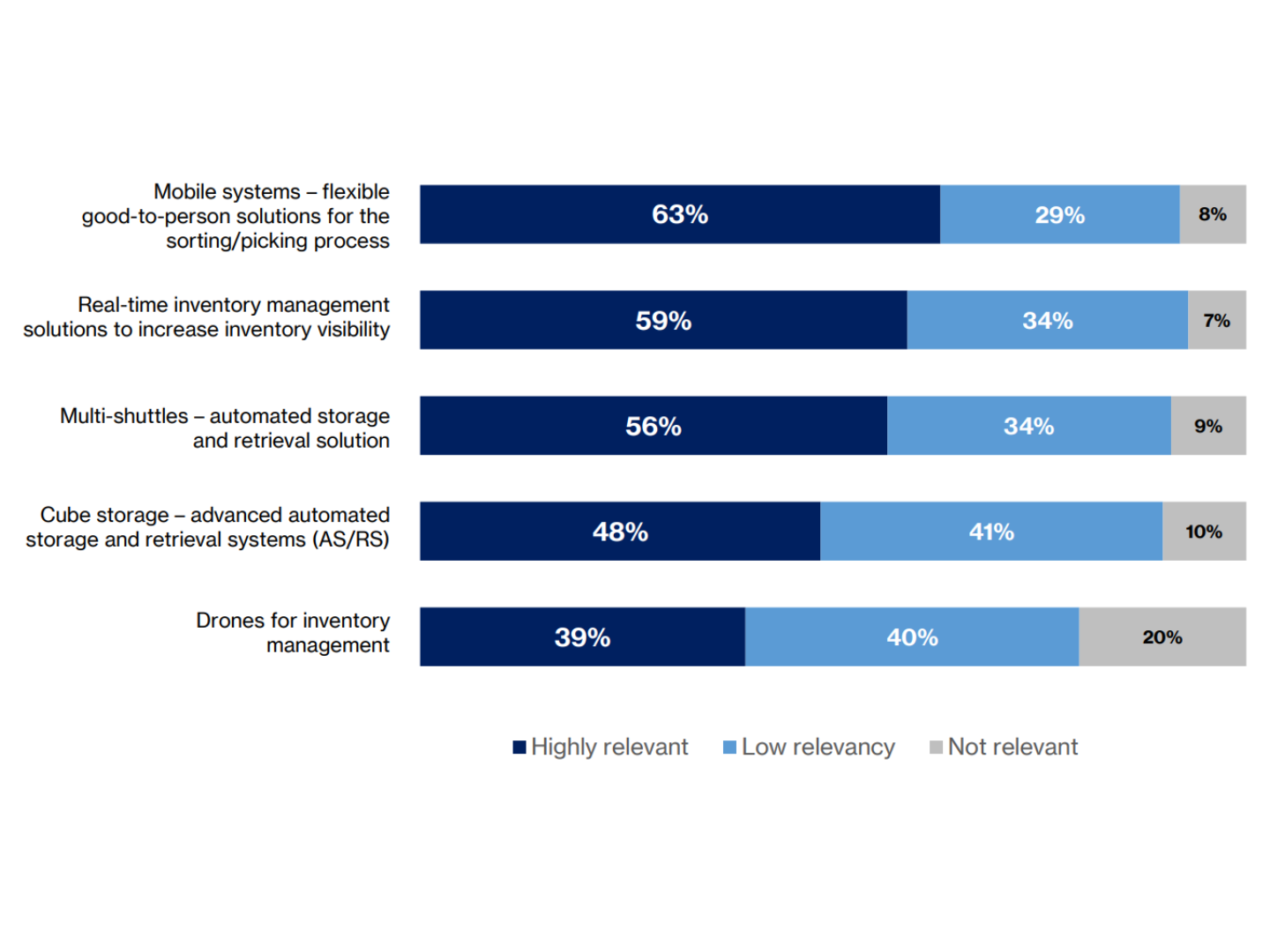
Technology relevance continues to rise as organizations continue to invest in automation to manage the growing complexity of omnichannel fulfillment and rising customer expectations.
Autonomous Mobile Robots (AMRs) are now considered highly relevant by 63% of respondents, up from 50% last year, making them the most prominent technology supporting omnichannel fulfillment and warehouse operations.
Multi-shuttles show the most dramatic increase in perceived relevance, rising from 14% to 56%. This change is signaling a significant acceleration adoption of goods-to-person and high-density automation strategies.
Cube storage (49%) reflects steady but more moderate penetration as companies explore dense storage solutions to support SKU proliferation.
By contrast, drones for inventory control (39%) remain more experimental, with a higher share of respondents indicating limited relevance (20%) suggesting that adoption is still in earlier stages.
The real-time mandate: synchronizing inventory across the omnichannel grid
Another key finding is the importance of real-time inventory management solutions, considered highly relevant for 59% of respondents. This aligns directly with one of the core challenges of omnichannel operations: maintain accurate, real-time inventory visibility across multiple channels and fulfillment nodes in order to deliver a seamless customer experience.
Overall, the data points to a structural shift toward more automated, data-driven fulfillment models.
Organizations are moving beyond standalone pilots and increasingly deploying scalable technologies designed to improve speed, accuracy, and inventory visibility - three capabilities that are fundamental for successful omnichannel execution.
Building the capabilities for the intelligent omnichannel supply chain:
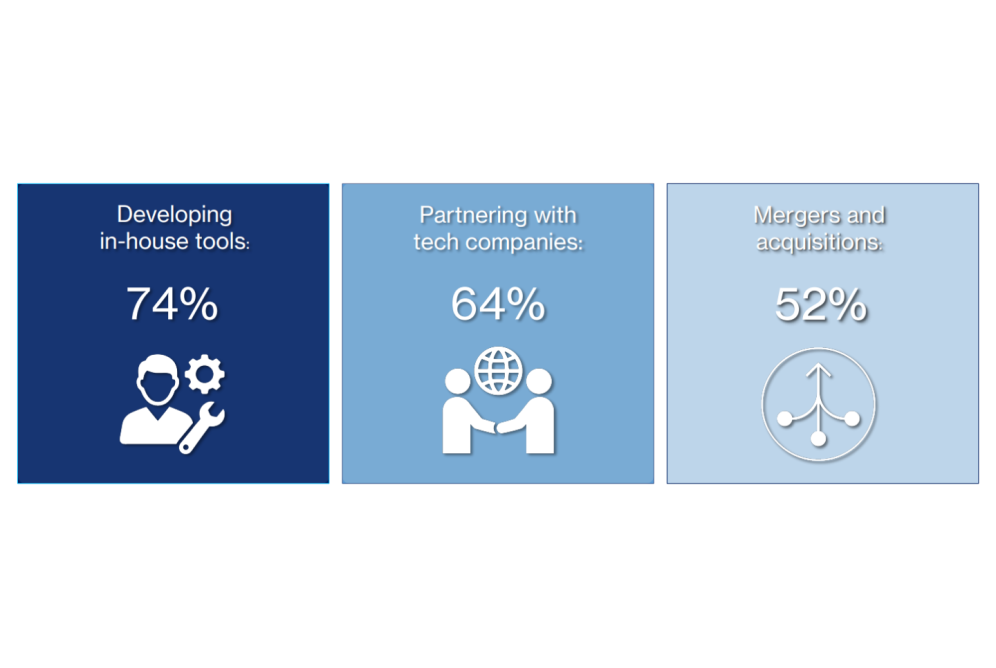
Finally, the survey highlights how organizations are approaching the implementation of advanced technologies and AI solutions. Internal capability-building dominates, with 74% of respondents developing in-house tools to strengthen strategic digital competencies.
At the same time, partnerships with technology companies (64%) remain essential for accessing specialized expertise and accelerating deployment, while merger & acquisitions (52%) serve as a mechanism for acquiring scarce capabilities and scale innovation.
Together, these strategies suggest that companies are no longer viewing technology adoption as a purely external procurement decision. Instead, leading organizations are building hybrid capability models - combining internal expertise, external partnerships, and targeted acquisitions - to embed the digital capabilities and technical expertise required to integrate and unify supply chain operations in omnichannel.