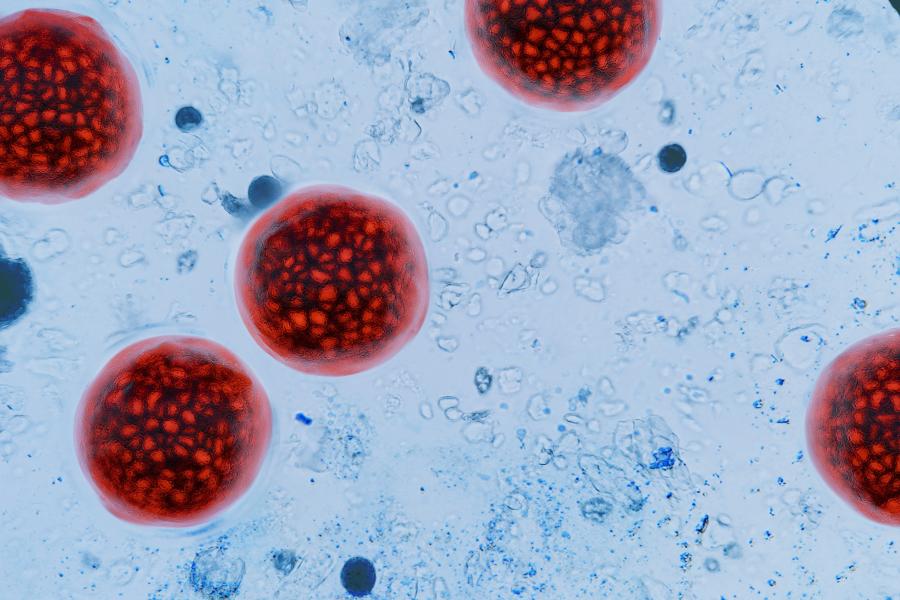
The CDC has identified over 11,500 cases of cyclosporiasis in the United States this season alone, with more than 4,000 confirmed and thousands more under investigation. In an era where we expect our food systems to be safe and efficient, a single contaminated product can trigger a cascading public health emergency that exposes critical vulnerabilities in how we trace food from farm to table.
This year's Cyclospora outbreak, which has disproportionately affected lettuce, joins a sobering list of food-borne illness crises that have tested the resilience of America's supply chains. In 2015, Salmonella from cucumbers sickened people across 40 states. In 2006, E. coli infections linked to Dole baby spinach spread to 26 states. In 2002, Listeria-contaminated sliced turkey deli meat from Pilgrim's Pride caused a widespread outbreak in 8 states, resulting in seven deaths and the recall of 27.4 million pounds of poultry products. Each outbreak reveals the same fundamental challenge: our food supply chain is extraordinarily complex, moving products through countless intermediaries before reaching consumers' plates.
When health officials identify a potential food-borne illness outbreak, they launch what Dr. Chris Mejia, a Research Scientist at the MIT Center for Transportation and Logistics, compares to a "criminal investigation." The process is methodical, moving backward through the supply chain layer by layer. "The way that we typically trace back any potential issues in the food supply chain is by considering first if consumers have been diagnosed with any kind of disease," Dr. Mejia explains. "After officials investigate that, they go back and identify where the retailers sold those potential products, and then they start going upstream in the supply chain. Then we move to the distributors or to the brokers, because some of the products come here from other parts of the world, not necessarily from the United States. And then we go back to the suppliers or the vendors."
The challenge intensifies as investigators encounter the inherent complexity of modern produce distribution. Fresh produce typically passes through multiple hands before reaching consumers, from farms to packing facilities, through brokers and wholesalers, across distributors, and finally to retail outlets. Each intermediary represents both a potential contamination point and an investigative bottleneck. "If the complexity starts growing in any of these supply chains—let's say you have many distributors—naturally, in order to identify where these specific produce items or products came from, it's going to take a longer period of time because you have a larger number of potential intermediaries there," Dr. Mejia notes. "So it can be the wholesale markets. It can be the producers. It can be the distributors. Sometimes the carriers. The more the complexity grows, the more difficult it is to identify where all of this happened, because this potential contamination or issues could have happened at the carrier level or at the wholesale level." In the case of this year's Cyclospora outbreak, the investigation traced contaminated lettuce back to Mexico, adding another layer of international supply chain complexity.
Once investigators identify a likely source of contamination, the supply chain response is swift but consequential. "Typically the traditional decisions that are made in order to control these potential outbreaks related to food include number one, product recalls," Dr. Mejia explains. "Product recalls are done by the FDA or the USDA. What they do is they start by identifying where all the potential products that might have been contaminated are located, and they start bringing them back in order to control them and destroy them." Beyond immediate recalls, supply chain practitioners must also address cross-contamination risks and restore consumer confidence in affected product categories. "The different stakeholders in the supply chain need to make different decisions. First of all, they need to identify where the sources of this potential outbreak are located. Secondly, they need to quickly identify what is happening and where this potential product was carried over until arriving to our hands. We need to make sure that everything that is related or came across all of these potential contaminated products is going to be properly managed, because at the end, there is going to be cross-contamination happening and any potential vegetable, produce or fruit that was in contact with this lettuce might have been subject to a potential issue."
For consumers, the advice is straightforward: avoid potentially contaminated produce until an outbreak ends and follow public health guidance. For supply chain professionals, the 2026 Cyclospora outbreak serves as an urgent reminder that the complexity of modern food systems demands smarter traceability infrastructure, faster detection mechanisms, and supply chain visibility that can withstand contamination at any point. The 11,500 cases reported this year represent not just a public health crisis, but a supply chain system being tested. With the threat of future outbreaks challenging our food networks, the question becomes: how can we build supply chains that offer maximum visibility and traceability to catch and contain contamination?


