While the journey may feel complete for the customer, for the supply chain, it has only begun. That single click can trigger decisions about inventory availability, fulfillment location, transportation, labor, returns, and the technology required to deliver on the promised experience.
Allegue’s presentation drew on MIT CTL’s fifth annual State of Supply Chain Omnichannel Report, which surveyed 647 supply chain professionals across industries including manufacturing, transportation, warehousing, and retail. The findings show that omnichannel adoption has matured, as the question is no longer simply how to build the capacity for scale, but how to operate it profitably.
That shift is moving companies from building and optimizing omnichannel networks toward orchestrating them. As cost-to-serve rises and margins come under pressure, AI is increasingly being used to connect decisions across the network rather than address isolated tasks.
The research points to AI applications across demand forecasting, inventory management, fulfillment, transportation, warehouse management, returns, procurement, risk management, and customer experience. In personalization, customer segmentation rose to 66% of reported applications, up from 37% in the previous survey.
The value of segmentation extends beyond recommending products or targeting marketing campaigns. It can help companies identify changing customer behavior, anticipate demand, adjust inventory allocation, and make more informed channel decisions.
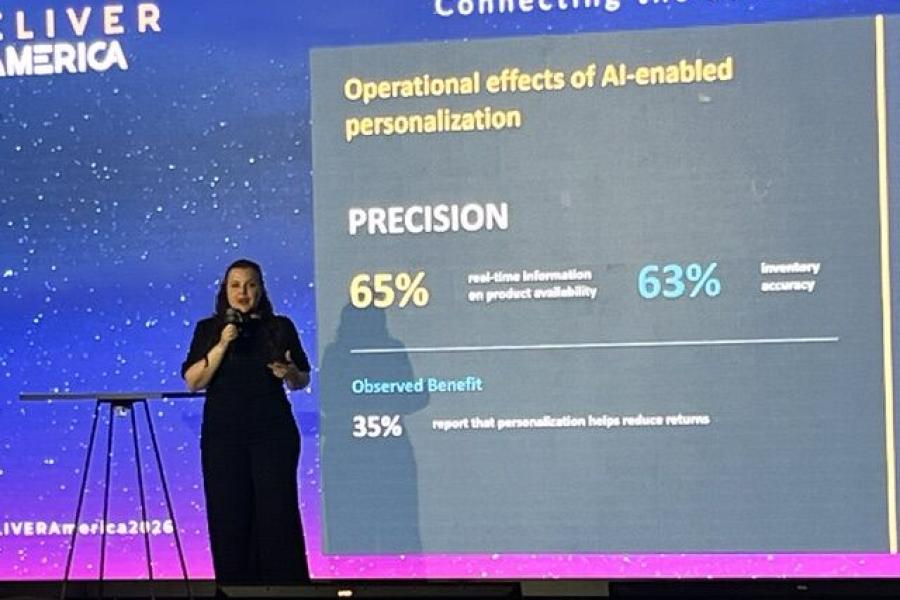
AI-enabled personalization also brings new operational demands. Respondents reported a greater need for accurate, real-time product availability information, improved inventory accuracy, more frequent restocking, and more SKUs per order. At the same time, 35% reported that personalization helped reduce returns.
The presentation’s central point was that technology alone will not define the next stage of omnichannel supply chains. Rather, the real opportunity lies in combining technology, data, and human expertise.
As AI takes on more routine work, employees will increasingly manage exceptions, validate AI-supported recommendations, and oversee decisions made by emerging AI agents. That calls for reskilling and continuous learning across the workforce, from entry-level employees to senior leaders.
The goal, Allegue said, is not simply automation, but augmentation. Omnichannel supply chains should use AI to help people make better, faster, and more informed decisions across the network.


